By prints.com.pk · Published July 21, 2026
Every seller eventually asks the same question: should the next batch of boxes be plain, or printed? The instinct is often to assume printed is simply “the better version” — more professional, more brand-forward — but that's not quite the right frame. Printed packaging is an investment with a real cost difference per unit, and like any investment, it pays off under some conditions and not others.
What Plain Packaging Actually Costs You
Plain mailer boxes and cake boxes are genuinely fine packaging — sturdy, food-safe where relevant, and priced lower per unit specifically because there's no print run involved. The cost isn't in durability, it's in the unboxing moment: a plain kraft box tells a customer nothing about your brand until they open it, which is a missed touchpoint at exactly the moment they're most engaged with your product.
What Printed Packaging Actually Buys You
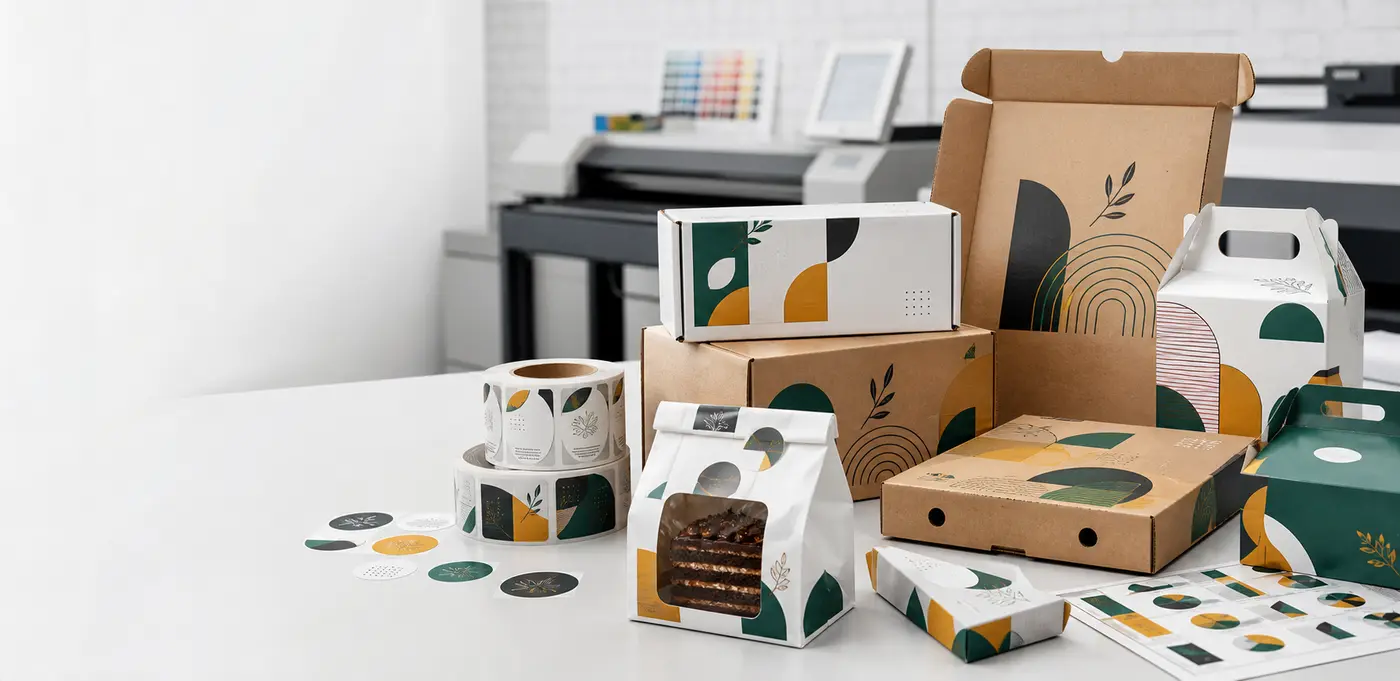
Full-colour printing turns the box itself into a brand touchpoint before the customer even opens it — on a doorstep, in a photo, in an unboxing video. For repeat-purchase brands specifically, that consistent visual signal compounds: a customer who recognizes your box before opening it is primed positively before they've seen the product again. That's a real, measurable brand-recognition effect, but it only compounds if there's repeat volume for it to compound across.
The Volume Threshold That Actually Matters
Here's the part most guides skip: printed packaging pays off fastest for sellers with either high order volume or a strong repeat-customer base — the print cost gets spread across enough parcels, and enough of those customers, to matter. A seller doing a handful of orders a month with mostly first-time buyers gets much less compounding value from the same print investment, since there's no repeat-recognition effect yet building up. That's not a reason to never print — it's a reason to be honest about timing.
A Middle Path Most Sellers Miss
You don't have to choose all-plain or all-printed across your entire catalog. A common, cost-effective middle ground: ship your standard product in plain packaging, but seal it with a printed thank-you sticker carrying your logo. It's a much smaller print investment than a full box print run, and it still puts your brand on every parcel at the exact point of first contact — the seal itself. We cover this and other accessory-level branding options in our guide on poly mailers vs. boxes.
Signs You're Ready for Full Printed Packaging
- You're seeing genuine repeat orders, not just one-off sales
- Unboxing photos or videos already show up organically from customers
- Your order volume is consistent enough to justify a print-run minimum without excess stock sitting around
- You've validated your product-market fit and packaging is no longer the thing you're testing
Signs Plain (or Tape-Only) Branding Still Makes Sense
- You're still iterating on product lines or sizes and don't want a print run locked to a design that might change
- Order volume is still low enough that per-unit print cost outweighs the brand-recognition benefit
- You're testing a new SKU before committing it to your main catalog
Printed Packaging Interacts With Box Choice, Not Just Cost
If you do move to printed packaging, it's worth revisiting box size and construction at the same time rather than just adding print to your existing setup — a well-sized, self-locking box holds print quality better over a shipping trip than a poorly fitted one, since abrasion and flex are what actually degrade print in transit. Our guide on mailer box sizing and our broader piece on packaging that survives Pakistani courier handling both cover the construction side of this decision.
Getting the Print Investment Right the First Time
Whichever stage you're at, a free digital proof before production means you're not committing a full print run to a design you haven't seen rendered on the actual box shape — something flat mockups don't always predict accurately. Our design services team can help translate a logo into a print-ready file that holds up at the sizes and materials you're actually ordering, rather than guessing.
A Simple Way to Test Before Committing
Rather than converting your entire catalog to printed packaging in one move, order a printed run for your single highest-volume SKU first. That limits your print-minimum exposure while giving you a real read on whether customers respond to it — more unboxing photos, more repeat orders referencing the packaging — before rolling the investment out further.
Minimum Order Quantities Change the Math
Printed packaging generally requires a higher minimum order than plain stock, since a print run has fixed setup costs that need to be spread across enough units to be worthwhile. If your monthly volume for a specific SKU doesn't comfortably clear that minimum within a reasonable stock-holding window, you're either sitting on printed inventory for months or effectively paying a premium per unit that erodes the branding benefit. Check your minimums against your actual monthly sell-through before committing, not just your total catalog volume.
Packing Time Is a Real, Often-Ignored Cost
Printed boxes with a well-designed self-locking construction pack just as fast as plain ones — the print doesn't add packing time. What does add time is a design that requires careful alignment (a logo that needs to sit centered on a flap, for instance) versus one that's forgiving of slight variation in how the box folds shut. If you're packing a high volume of orders yourself or with a small team, favor print designs that stay legible and attractive without needing perfect flap alignment every time.
Printed Packaging as a Launch Signal, Not Just a Cost
For a genuinely new product line launch, printed packaging from day one can function as a signal of commitment and quality to early customers and reviewers, even before repeat-purchase volume has built up — this is a case where the branding investment is justified by the launch moment itself rather than by accumulated order volume. It's worth treating a true launch differently from ongoing steady-state packaging decisions for exactly this reason.
Revisiting the Decision as Volume Changes
The plain-versus-printed decision isn't permanent. A brand that started with plain packaging while validating a product should genuinely revisit the decision every few months as order volume grows, rather than treating the original choice as fixed indefinitely. Many sellers we work with only move to printed packaging once they notice they're already answering the same brand-recognition question repeatedly in customer messages — a practical signal that the compounding value is already there, waiting to be captured.
Don't Let the Decision Block Getting Started
Sellers sometimes delay launching entirely while deciding between plain and printed packaging, treating it as a bigger decision than it needs to be at the start. Plain, sturdy packaging is a completely legitimate way to launch and start generating real order volume — the printed-packaging decision can wait until you have actual data on repeat purchase rate, rather than being solved perfectly in advance of your first sale.
Factoring In Competitor Packaging
If most sellers in your specific category already ship in printed packaging, plain packaging can read as under-invested by comparison, even if your product itself is competitive — category norms shift what customers expect as a baseline. It's worth a quick look at what comparable sellers in your space are doing before assuming your own volume threshold is the only factor in the decision.
A Simple Framework to Decide Today
If you're unsure which side of this decision you're on right now, three questions settle it quickly: do you have genuine repeat customers yet, does your monthly volume clear a printed-run minimum comfortably, and does your category already expect printed packaging as standard? Two or three “yes” answers point toward printing being worth it now; mostly “no” answers mean plain packaging (possibly paired with branded tape) is still the right call for where your business is today.
Packaging Decisions Should Follow Product Decisions, Not Precede Them
It's worth resisting the temptation to over-invest in packaging design before your actual product and pricing are settled. A printed box designed around packaging or pricing details that change within a few months is a sunk cost you didn't need to take on yet — get the product and price right first, then let packaging follow once those decisions have stabilized.
Ultimately, there's no universally correct answer here — only the answer that fits your current order volume, repeat-purchase rate, and category norms. Revisiting the decision honestly every few months, rather than treating an early choice as permanent, is what keeps the packaging investment matched to where your business actually is.
Whichever stage you're at, the decision is reversible — moving from plain to printed later, once volume justifies it, costs nothing beyond the print setup itself, so there's little downside to starting plain and upgrading once the numbers clearly support it.